


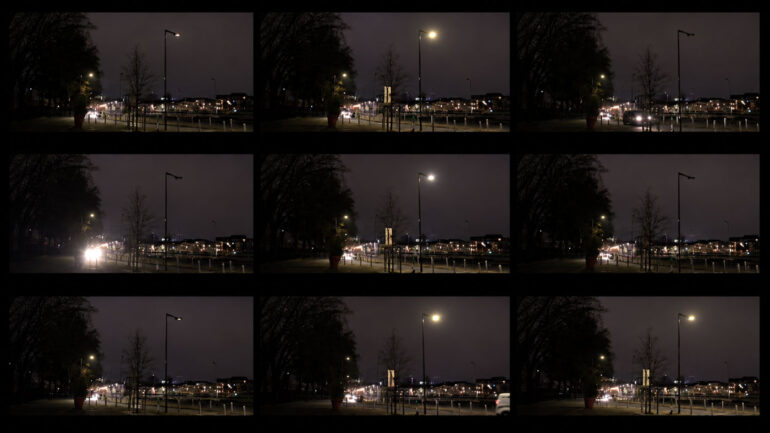
Urkopplad is a kind of city beneath the city.
Urkopplad means disconnected in Swedish. On old electrical installation diagrams, the abbreviation Urk can sometimes be found next to a section disconnected from the rest of the network.
Disconnected can also mean switched off.
And what if, instead of saying that a lamp is switched off, a fridge is switched off, a mind is switched off, a cable is disconnected, we said they were hibernating?
Urkopplad, the city beneath the city, the kilometres of disconnected cables and circuits, the abandoned tramlines, the three-phase power systems that once supplied electricity to an industrialising Europe which has since relocated much of its industry elsewhere : all of this is hibernating.
They lie dormant, yet breathe to the rhythm of fluctuating electrical potentials. Electrical flickers, glorious remnants and latencies play with time, with metal, with fleeting conductive objects. The current that once flowed through them has left something of itself behind, a trace, an ivory groove. Electrons continue to wander through them, generating signals without our knowledge. Sometimes, we can hear the echoes of these lingering memories.
Duu Din Ka (Mathilde Schoenauer Sebag - Fr/Be)
Duu Din Ka is, above all, a story of sounds. Of harp, singing and electrons.
Of words, text, videos, radio, movement and silence.
Of rain falling on a skylight, coffee being poured and a map unfolding.
Duu Din Ka begins with ten curved fingers playing scales on a harp. Enough to whet the appetite for sounds and stories. Electro, experimental music, even noise, sound poetry, Duu Din Ka exists both in the studio and live, where it becomes almost more of a performance than a concert. What remains, firmly rooted at its core, is a love of sounds, words and the ways they are arranged. Standing proudly on its four feet, the harp takes centre stage, while electronic and vocal elements weave themselves around it.
Mathilde Schoenauer Sebag trained as a chemical engineer and holds a PhD in materials science, specialising in solar panels, from ESPCI, the École supérieure de physique et de chimie industrielles de la Ville de Paris. She soon became disillusioned with modern Western science, at times falsely claiming neutrality, at others steeped in outdated narratives of technological progress, entirely out of step with environmental and social realities. She therefore sought a space where her convictions and the urgency of expressing them could resonate. Today, she moves with pleasure between sound creation, live performance, teaching and activism.
Her work has been presented at venues such as Fabrioles in Figeac and Château Pergaud, while she has also taken part in events including Prix Europa in Berlin and Grand Prix Nova in Bucharest. Her radio works have been broadcast on Radio Campus Bruxelles, Radiophrenia, Radio Vostok, Radio Escapade, Radio Panik, 100 Radio, Radio Publik and Radio Pogge… Her commitment to sound creation has also led her to lead workshops and contribute to academic institutions such as ESPCI in Paris and UCL in Louvain.
duudinka.com
Further reading : The Sound Chemistry of Mathilde Schoenauer Sebag by Jacques Urbanska | Turbulences Video #118
Stéphane Odrobinski (Fr/Be)
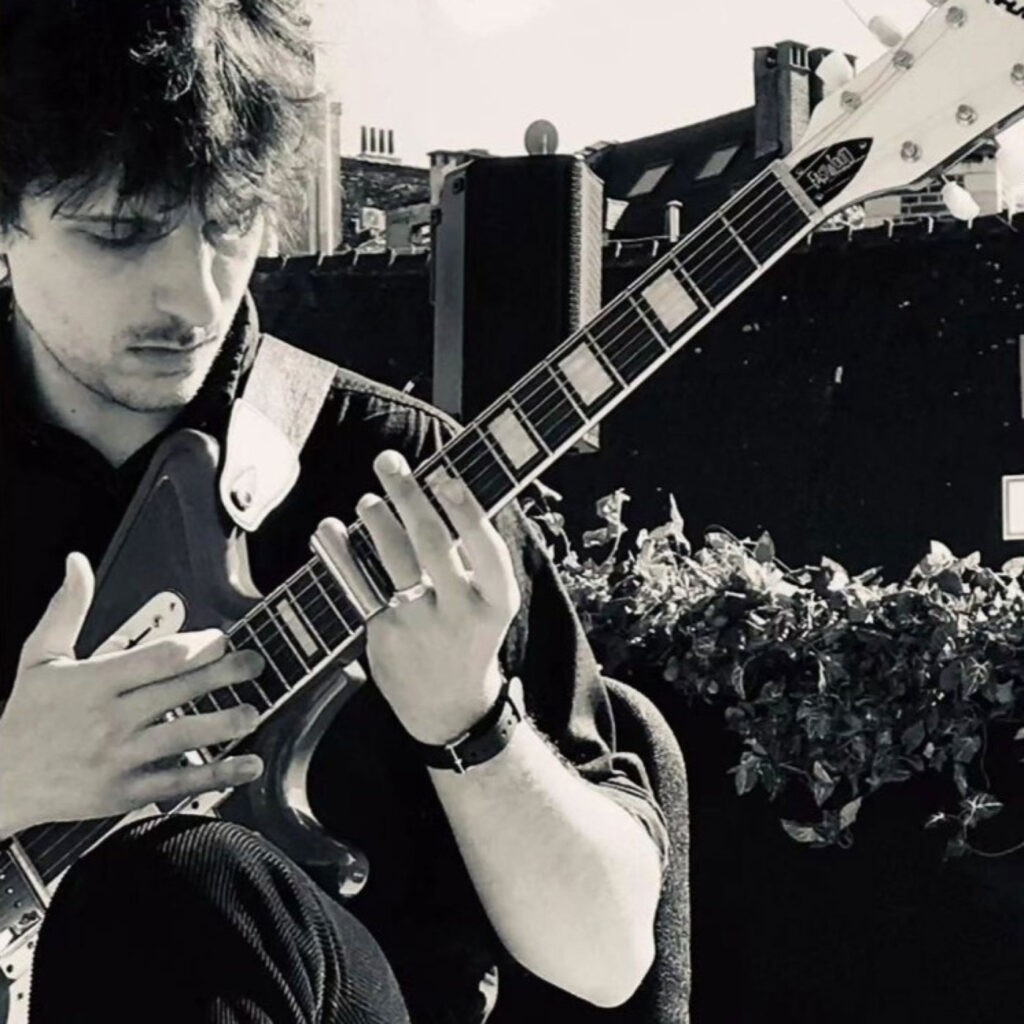 A French multi-instrumentalist and sound artist based in Brussels, Stéphane Odrobinski works at the intersection of experimental music, folk, drone and ambient music, developing a practice centred on the electric guitar and exploring the relationships between harmony, melody, sonic textures and sustained sounds.
His practice combines instrumental performance, improvisation, field recordings and electroacoustic experimentation, embracing the intersections between music, performance and interdisciplinary creation.
After playing in several bands, including Twirrl, Aszul and Rodjitsé, he developed personal projects such as Le Bleu de la Rivière Tournesol, inspired in particular by the work of American guitarist John Fahey, and Une maison dans la drone, which continues his exploration of the expressive possibilities of the electric guitar.
His compositions blur the boundaries between acoustic and electronic sounds, weaving evocations of urban soundscapes, engines and sirens into melodic and harmonic structures. He also presents his work on independent radio platforms such as Kiosk Radio and Gimic Radio, and develops collaborations with artists working in dance, performance and the visual arts.
Information
- 05.11.2026 | 20:00
- Centre Culturel de Namur
- 2, Place du Théâtre, 5000 Namur
- Free admission
- prisme-namur.be
Production
- Centre Culturel de Namur – As part of the launch of “Musiques en Résidence”
- Mathilde Schoenauer Sebag receives support from Transcultures
