


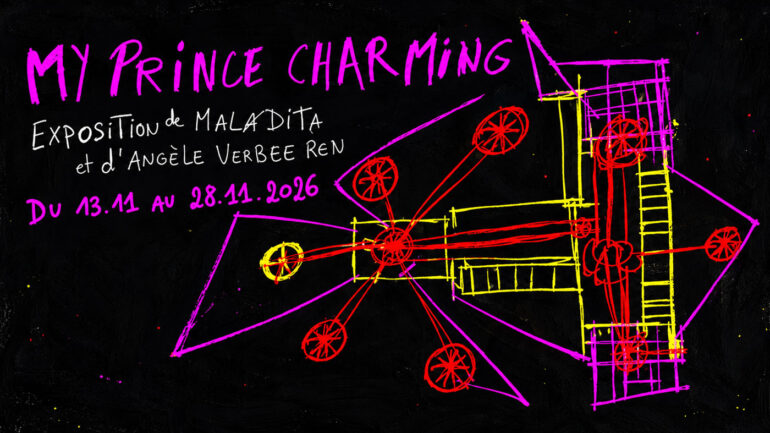
As part of its artist residency programme and public presentations of work developed in residence, Transcultures presents an evening bringing together three artistic projects developed at the Couvent d’Hautrage. Bringing together visual arts, interactive installations, sound experimentation and live performance, the event offers an opportunity to discover the research and work of artists hosted by Transcultures over recent months.
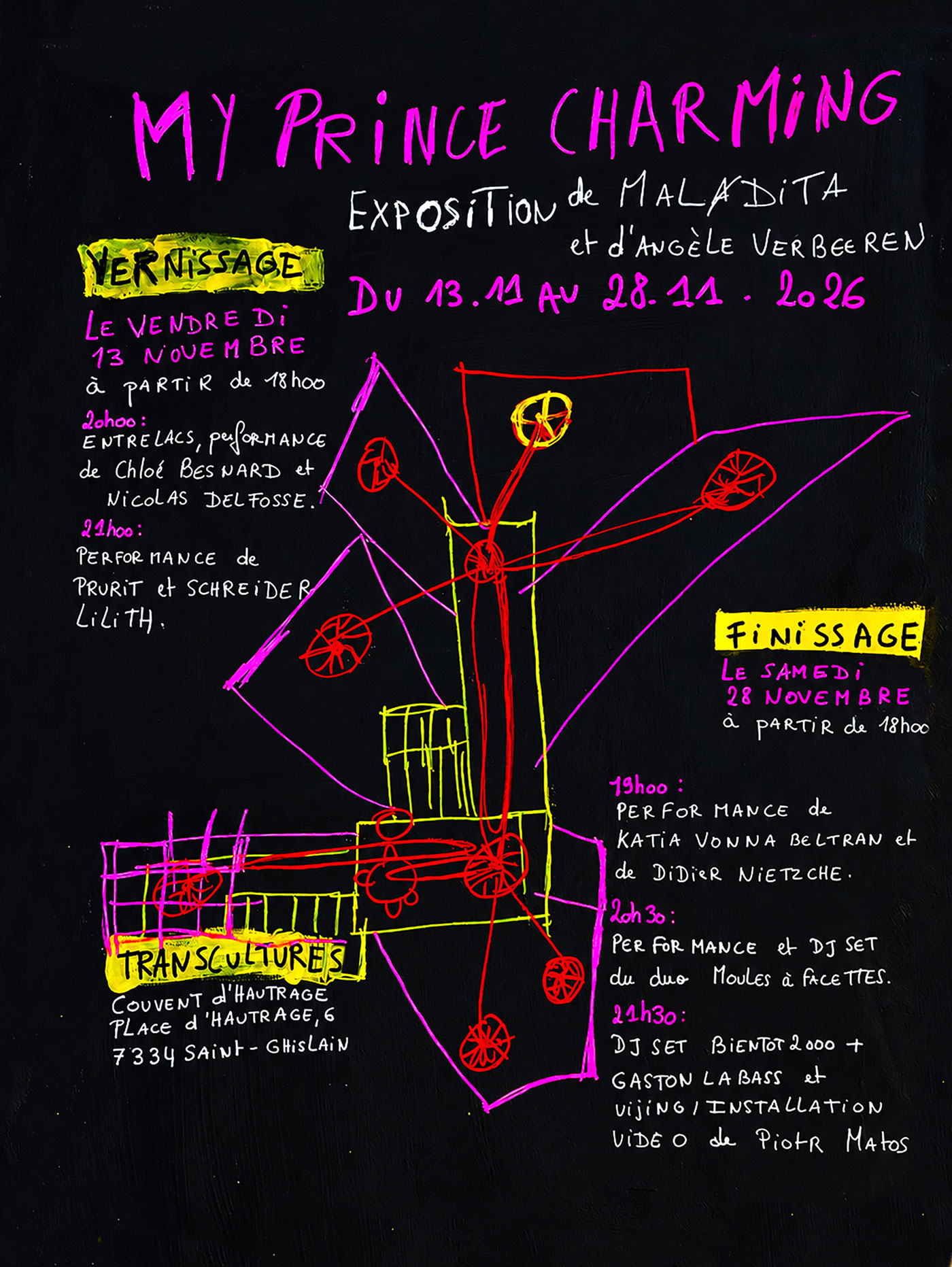
The programme includes: My Prince Charming by the Maladita collective (Aurélie Bay, Nathalie Hannecart and Angèle Verbeeren), a sculptural and mechanical installation; Entrelacs, a performance by Chloé Besnard and Nicolas Delfosse developed from their interactive audiovisual installation exploring the relationships between materials, sound and memory; and Prurit & Schreï Lilith by Philippe Baraduc and Viviane Vancoppenolle, a performance combining DIY electronic instruments, noise improvisation and politically engaged vocals.
The evening will also mark the opening of the exhibition My Prince Charming which will be on view at the Couvent d’Hautrage until Saturday 28 November 2026.
13 > 28.11.2026 - Exposition Maladita + Angéle Verbeeren
My Prince Charming
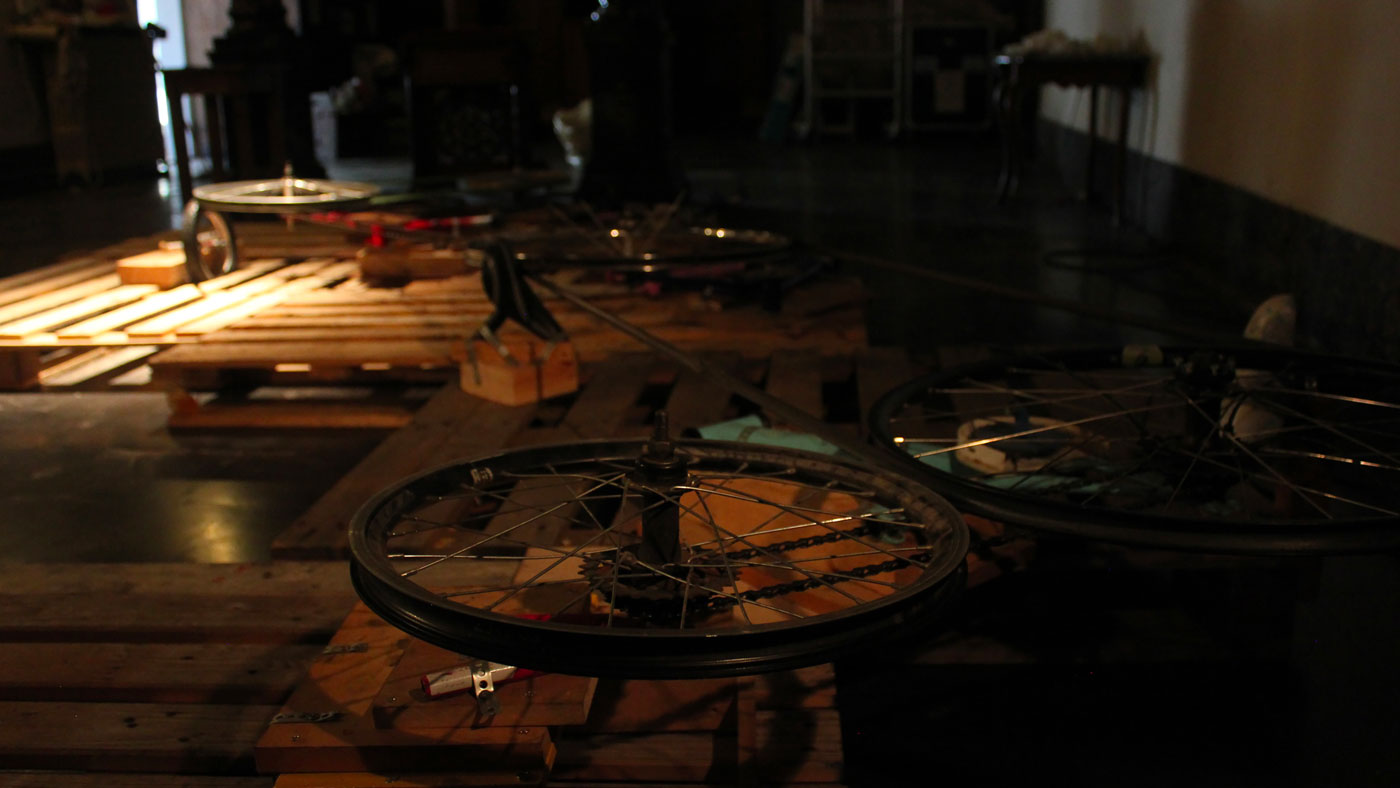
The installation features seven life-size papier-mâché figures of female saints, set in motion by a rotating mechanical system built from salvaged materials. Presented in a cardboard theatre drawing on Baroque and Neoclassical styles, the figures inhabit a setting combining pink neon lights, a disco ball and disco songs sung by women. They include Saint Agatha and Saint Lucy, whose legends recount violence inflicted on women who refused to submit to male demands, as well as Saint Aurélie and Saint Nathalie, whose names echo those of the two artists.
The project also includes Le Lupanar, a vending machine dispensing merchandise bearing the saints’ likenesses: candles, relics, clothing and other accessories. Drawing on popular devotional practices and the trade in religious objects, this part of the installation explores the relationships between the sacred, commerce and consumption.
Developed in part during residencies at the Couvent d’Hautrage, *My Prince Charming* incorporates materials and textiles recovered on site, together with garments made in collaboration with local seamstresses. The project also involves research into the convent’s archives, intended to inform a publication bringing together saints’ stories, the memories of the nuns and the experience of creating the work.
Maladita (Be)

Maladita is an artist duo formed by Aurélie Bay and Nathalie Hannecart, both visual artists and photographers based in Belgium. Having trained at the Academies of Fine Arts in Charleroi and Namur respectively, they pursue a hybrid practice spanning photography, drawing, video, installation and artists’ publishing.
For more than six years, they have developed a shared body of work combining social engagement and irony with a critical re-examination of femininity, religious narratives and popular myths. Their work brings together self-portraiture, humour and staging, alongside found and symbolically charged materials.
They have exhibited in Belgium and internationally (France, Spain, Portugal, Brazil, Chile and elsewhere), and their work is held in several public collections, including the Musée de la Photographie in Charleroi and the Artothèque des Chiroux in Liège. In 2023, they received the “4 mains et plus si affinité” award from Galerie Vertige (Brussels), and in 2024 their book Pedro was shortlisted for the Prix du livre d’auteur at the Rencontres de la photographie d’Arles.
Aurélie Bay (Be)

Born in 1981, Aurélie Bay is a Belgian visual artist based in Brussels. Trained in photography, sculpture, drawing and video at the Academies of Fine Arts in Charleroi and Molenbeek-Saint-Jean, she has developed a transdisciplinary practice closely concerned with freedom, the body and trauma in its many forms.
Through her alter ego Maladita, she critically examines social constructions of femininity, narratives of martyrdom, invisible lineages and structures of power. In installations combining everyday materials, Baroque imagery, repurposed devotional objects and pop music, she stages hybrid, grotesque or sacred figures that move between vulnerability and resistance.
Her work has been presented in numerous exhibitions in Belgium and internationally (France, Spain, Croatia, Canada, Portugal and elsewhere), as well as at art spaces including Le Vecteur, Exit11 and La Châtaigneraie. She has also co-authored several small-press publications and fanzines, and was selected for the Prix de la Jeune Sculpture (2020) and the Prix du livre d’auteur at the Rencontres d’Arles (2024 selection).
Nathalie Hannecart (Be)

Nathalie Hannecart is a Belgian photographer who lives and works in Namur. After initially studying Romance philology at UCL (1998–2003), she turned to photography, graduating from the Academy of Fine Arts in Namur (2010–2019).
Working with analogue photography and alternative processes (cyanotypes and photograms), she explores traces, palimpsests and the marks left by time in urban and industrial environments. Through her camera, she examines walls, attending to what emerges from beneath their surfaces and to the relationship between presence and absence.
In 2015, she co-founded Atelier 22 at the University of Namur, an analogue photography laboratory dedicated to photographic processes and knowledge sharing, which she continues to coordinate.
Her solo exhibitions include “Orfeo” in Brazil (2024) and “La nuit remue” at Le Delta in Namur (2021). She also regularly takes part in group exhibitions in Belgium and internationally (Spain, Croatia, Chile, Portugal, Canada and elsewhere). Her work is held in several public collections, notably the Artothèque de Liège and Émulation (Liège).
She also pursues a collaborative practice as a member of the Aspëkt collective and the Maladita duo, combining photography, drawing, video, installation and small-press publishing.
Angèle Verbeeren (Be)
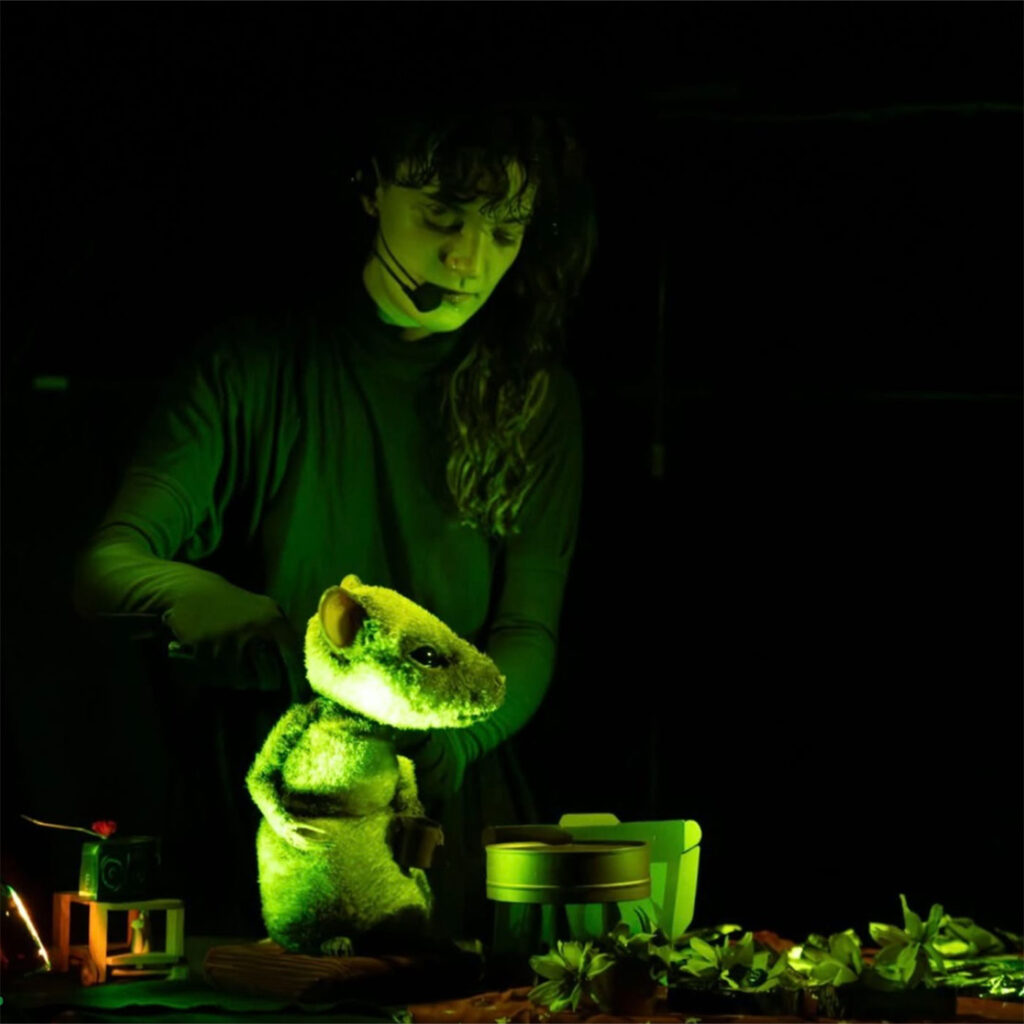
Born in 2000 and based in Mons, Angèle Verbeeren is a visual artist and puppeteer. Trained in sculpture, electronics and puppetry at Arts² (Mons, 2021–2026), she develops a practice at the intersection of these disciplines, exploring the relationships between electronics, installation and scenography.
Her work is informed by a spirit of dissent, questioning a society marked by violence and detached from reality. Using playful forms that push against the conventions of the performing arts, she addresses marginality through the imagery, codes and myths of childhood.
She explores ways of transforming materials through reuse and repurposing. Moving beyond established conventions of contemporary art, she works with the resources closest at hand, from washing machine motors to fabrics found in the spaces she occupies.
13.11.2026 - Chloé Besnard, Nicolas Delfosse
Entrelacs
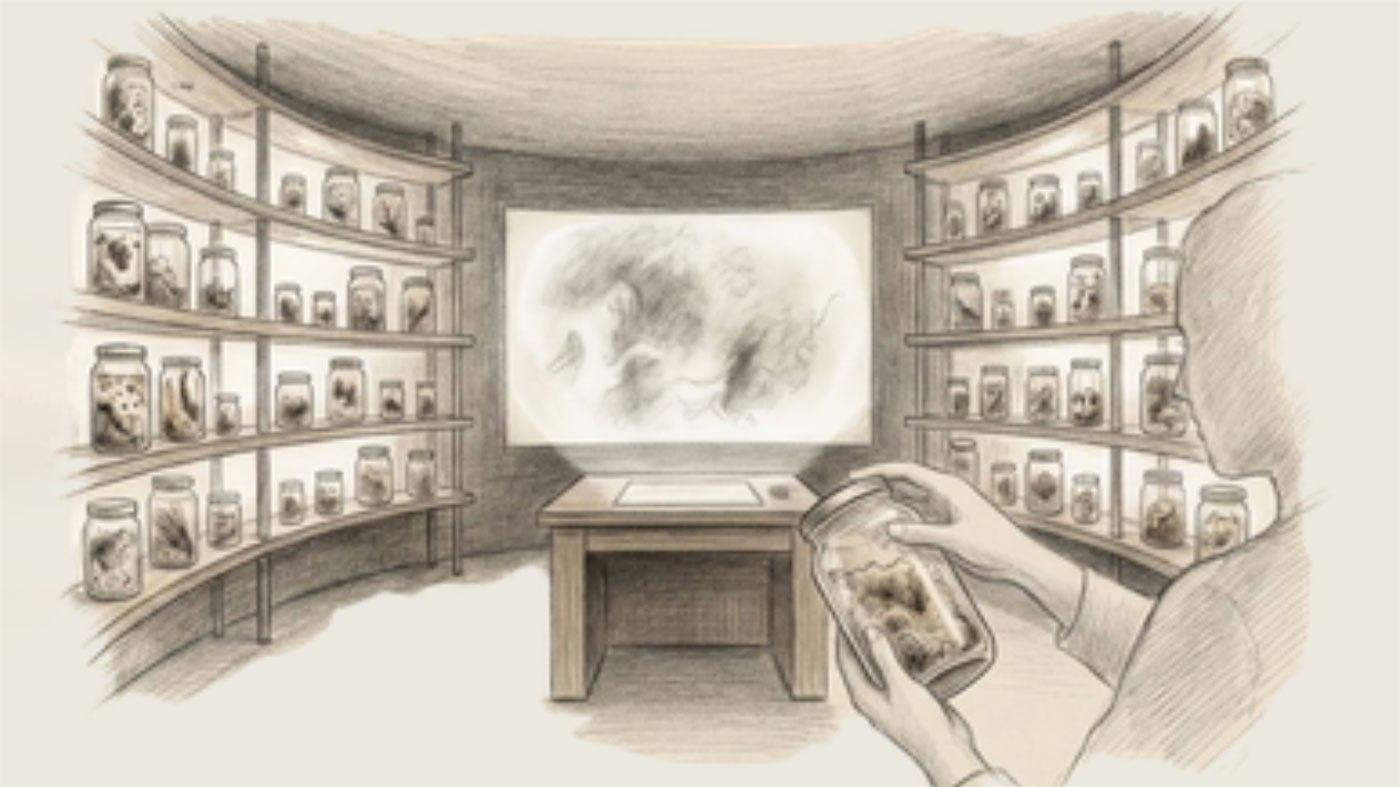
For this public presentation of their residency, the duo will present the project as a performance
Entrelacs takes shape from fragments of reality collected by the two artists: images, sounds, traces and materials gathered in everyday places and transitional spaces. Chloé Besnard builds visual archives from gestures, textures, light and imprints, while Nicolas Delfosse records the acoustic signatures of these places and transforms them into electroacoustic compositions.
These materials feed into a generative installation in which visitors take part through a deliberately simple gesture: choosing a jar containing a collected material and placing it on a station. This triggers an audiovisual sequence generated in real time. The sound compositions influence the images, their colours, rhythm and editing, through a set of rules and variations that make every activation unique.
Rather than recreating or documenting the places from which the materials originate, the installation offers a sensory and memory-based reinterpretation. The device creates an experience in which elements that are both familiar and transformed may resonate with each visitor’s own memories. Entrelacs is conceived as an evolving ecosystem, designed to grow through new locations, collections and residencies.
Chloé Besnard (Fr)
 Born in Lille in 1993, Chloé Besnard lives and works in Roubaix. After completing a vocational qualification in photography (BTS) and a degree in visual arts at the École Supérieure des Arts de Tournai, she developed a multidisciplinary practice spanning photography, installation, video, painting and ceramics.
Her work explores social norms, processes of invisibilisation and the traces left by bodies and everyday activities. Her projects unfold over extended periods, combining collecting, testimony and experimentation with materials. She also researches ordinary and discarded materials, particularly coffee grounds, which she uses as a pigment and material in paintings, ceramics, bioplastics and installations. Her projects include ANNA, Wake Up, Les Cons and RESPiRE.
Nicolas Delfosse (Fr)
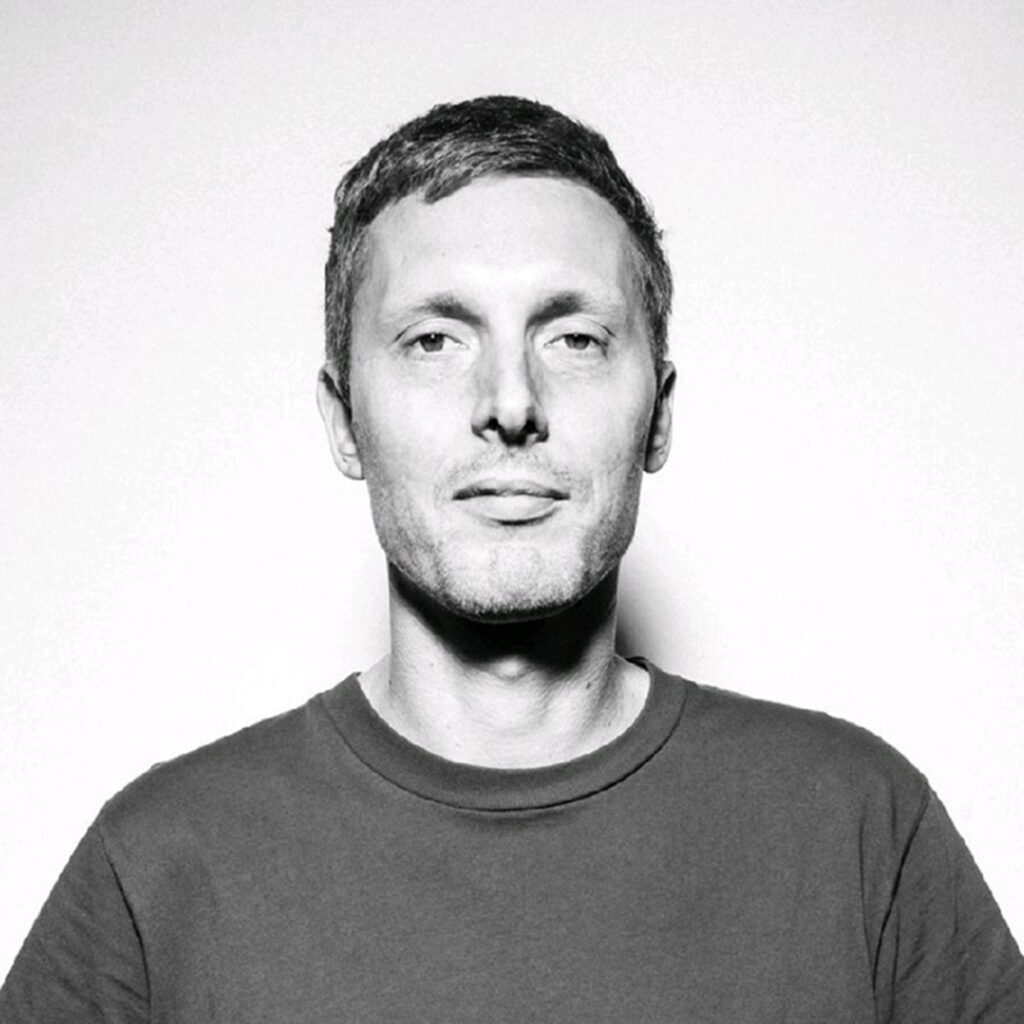 Sound designer and electroacoustic artist Nicolas Delfosse lives and works in Roubaix. A self-taught practitioner with roots in electronic music culture and real-time signal processing, he has developed a transdisciplinary practice spanning experimental music, visual installation and digital art.
His work places listening, interaction and exchange at the heart of the artistic process through performances, generative systems and participatory projects. After heading Emaho’s northern regional branch, an organisation dedicated to digital arts, for seven years, he co-founded Otium in 2021 to support engagement with experimental sound practices. In 2023, he initiated the SFEER project with Olivier D’Hooghe. His work includes the installations SHED and NEST, as well as Métamorphose du Quotidien and the participatory project Fabrique Ton Concert.
13.11.2026 - Philippe Baraduc + Viviane Vancoppenolle
Prurit & Schreï Lilith
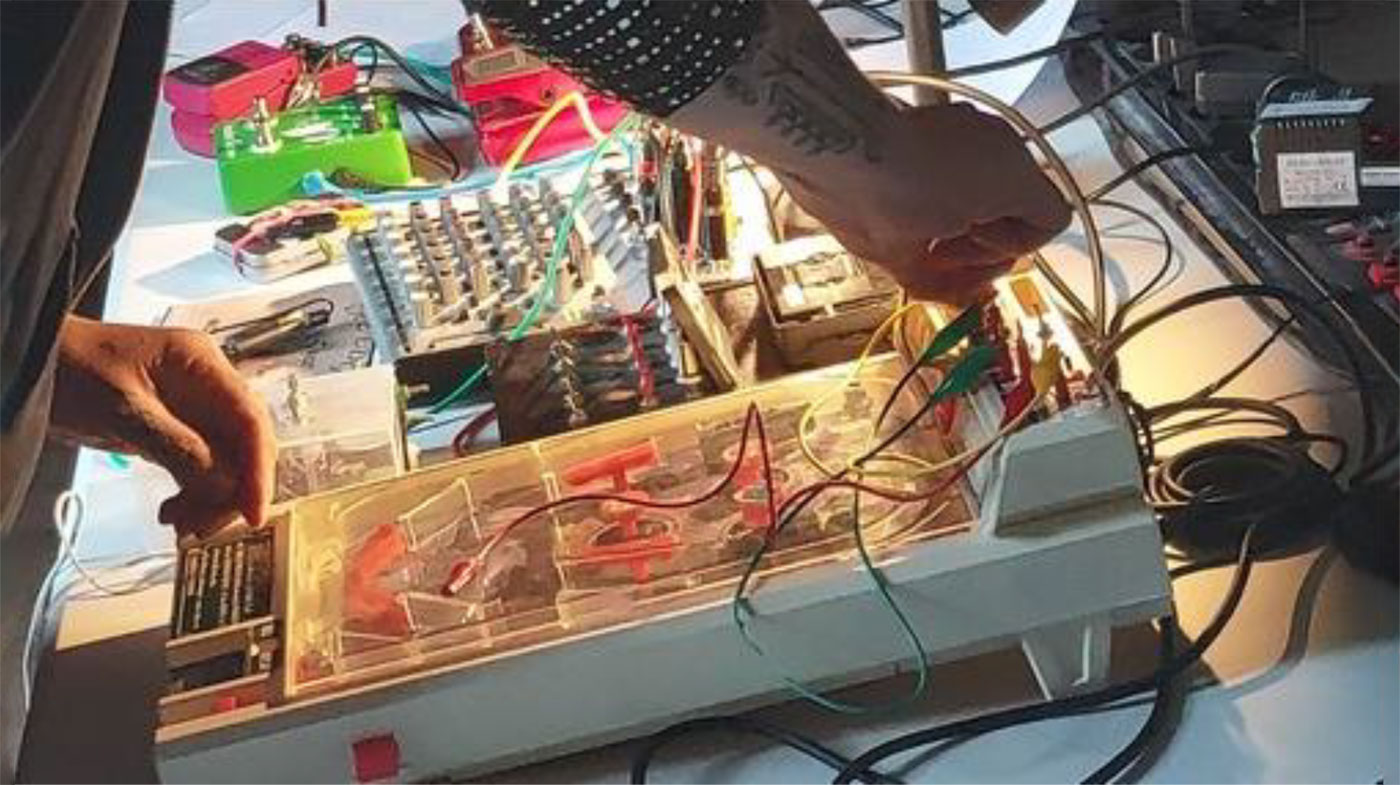
For this event, the duo will present an initial performance version ahead of a public residency presentation scheduled for 25 October as part of Warm Club.
Prurit creates sound improvisations using DIY, low-tech and low-cost instruments, over which Schreï Lilith delivers a vocal performance of screams, rhythmic declamation, whispers and texts that sit somewhere between slogans and French chanson.
Working against a creative environment largely dominated by computers, the project embraces a retro-technological approach based on building accessible sound-making objects from simple electronic devices and recycled materials.
These noise textures provide a framework for a direct vocal presence combining invective, exhortation, fragments of narrative and forms of activist expression. Together, they form a performance that brings together sound experimentation, electronic tinkering and critical engagement.
Schreï Lilith (Viviane Vancoppenolle - Be)
Schreï Lilith develops a performance practice at the intersection of punk, noise and contemporary feminist expression. Her work draws on the energy of bands such as Pussy Riot and Les Vaginites, as well as the international noise scene highlighted by platforms such as Women of Noise, while maintaining a strong connection to French-language artistic practices and traditions of activist expression.
Her visual identity is central to this approach. The balaclava she wears refers in part to the visual language of Pussy Riot and is intended to incorporate embroidered floral motifs in tribute to the graphic and activist work of Oksana Shachko, co-founder of Femen. Costume thus becomes an integral part of the performance, challenging norms surrounding the body, appearance and the ways women choose to represent themselves, regardless of age, body shape, background or culture.
The name Lilith refers to a figure from medieval Jewish traditions and narratives, in which she appears as Adam’s first companion, created like him from the earth and refusing a relationship based on submission. Gradually recast as a demonic figure in different traditions, Lilith has been reinterpreted in contemporary thought as a symbol of emancipation and resistance to patriarchal domination.
Schreï Lilith draws on this symbolism in a practice combining vocal performance, punk aesthetics, DIY culture and the questioning of representations of women.
Prurit (Philippe Baraduc - Be)

After undertaking his first experiments alongside sound artists such as Xavier Gazon and Alain Wergifosse, Prurit gradually began developing his own DIY instruments and sound devices.
His practice is based on deliberately unstable configurations, in which the arrangement of, and connections between, different devices change from one performance to the next. The resulting signals can never be fully reproduced. Textures, feedback, electronic accidents and random patterns are generated and organised live, in an exploration of the physical and sensory dimensions of noise.
His performances use a range of low-tech instruments and repurposed electronics: toys modified through circuit bending, altered cassette players, contact microphones, an Arduino signal generator, audio tapes, distortion units and filters. Errors, instabilities and electronic anomalies are not corrected but incorporated into the creative process, becoming sound material in their own right.
With a Master’s degree in Artificial Intelligence and Knowledge Transfer and New Technologies, Philippe Baraduc has written and performed science shows for children and families since 2009. He develops projects that make scientific concepts tangible and engaging, encouraging the pleasure of discovery. With Prurit, he explores a more experimental side of his practice, at the intersection of sound, electronic tinkering and improvisation. Since 2026, he has also launched the Warm Club gatherings.
Informations
- 13.11.2026 | 18:00 – Exhibition opening
- 14 > 28.11.2026 | Exhibition
- 28.11.2026 | 1800 – Closing event
- Transcultures – Couvent d’Hautrage
- 6 Place d’Hautrage 7334 Saint-Ghislain
- Free admission
Production
- Maladita, Transcultures
- With the support of the Visual Arts Commission of the Wallonia-Brussels Federation
