


Transcultures is pleased to support Roxane Rajic’s project and Keramis’s initiative, both of which champion emerging ceramic practice with rigor and sensitivity, embracing intersections between matter, movement, sound, and contemporary experimentation.
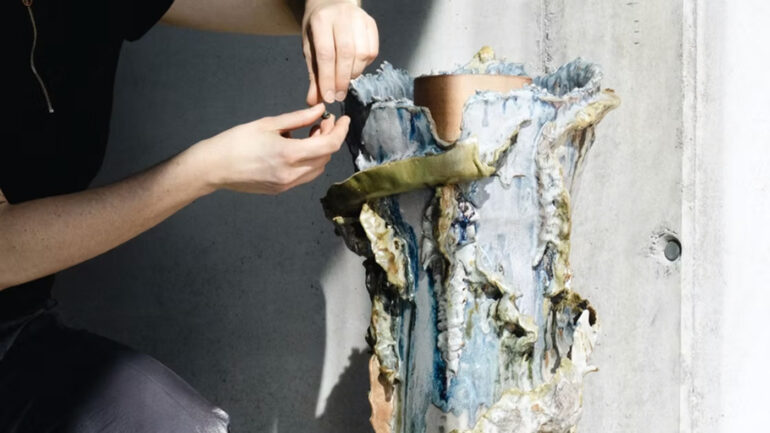
La marée sans étoiles is a sound and kinetic installation by Roxane Rajic, whose practice lies at the crossroads of sculpture, installation, performance, sound, and a technological exploration of the ceramic medium.
The artist undertook a 50-day residency at the Keramis studios to develop this new work. Conceived as the outcome of that residency, La marée sans étoiles extends an ongoing line of research in which ceramics become at once form, mechanism, breath, and resonance.
Bringing together ceramics, movement, and sound, Roxane Rajic draws inspiration here from the subterranean world. The installation sets ceramic machine-sculptures in motion through water, breath, and gesture, bringing forth a sensitive landscape shaped by invisible dynamics, hidden circulations, frictions, and echoes. In this work, interaction is not simply a technical trigger: it engages the body, attention, and a heightened awareness of the gestures that connect us, both individually and collectively.
Presented at Keramis from April 18 to May 31, 2026, the exhibition also includes performative activations, notably during the opening on April 17 at 8 pm and on May 15 at 7 pm, on the occasion of the World Day of Louviérois / Louvière Museum Night.
Roxane Rajic (Be)
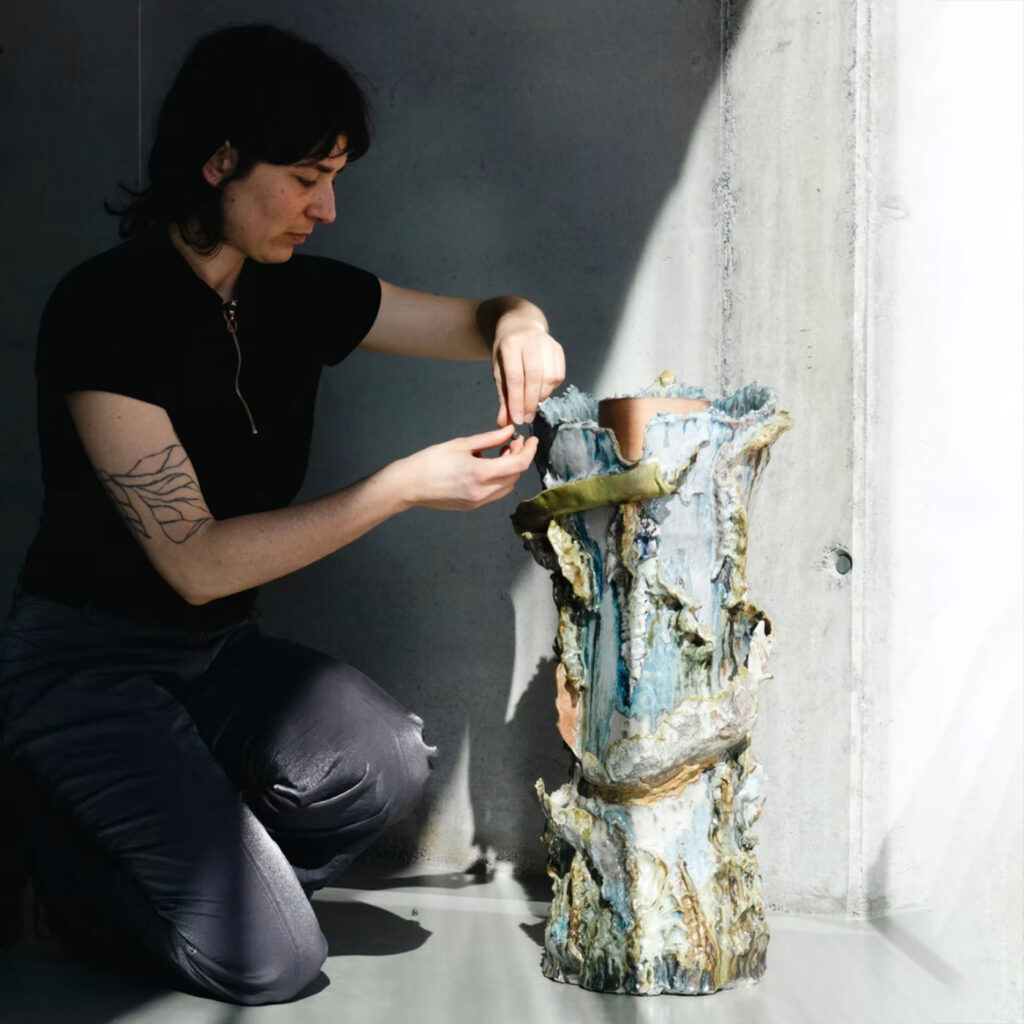
Winner of the 2025 Young Ceramic Creation Residency Prize of the Wallonia-Brussels Federation, Roxane Rajic lives and works in Brussels. Born in 1993, they graduated from ENSAV La Cambre, where they studied ceramics from 2019 to 2024. Their practice unfolds at the intersection of ceramics, sculpture, installation, sound, and performance, with particular attention to gestures of interaction and the forms of relation they produce. Their trajectory already reflects a strong interest in the resonant, activated, and experimental dimensions of ceramics, which now lie at the heart of <i>La marée sans étoiles</i>.
Their work has been presented in a range of exhibition contexts in Belgium and abroad, and is rooted in a cross-disciplinary approach to creation, in which ceramics enters into dialogue with other modes of presence, perception, and activation. With <i>La marée sans étoiles</i>, Roxane Rajic asserts a distinctive artistic language in which sculpture becomes a device, matter becomes a resonating body, and gesture activates a landscape that is at once physical, sonic, and imaginary.
Keramis (Be)
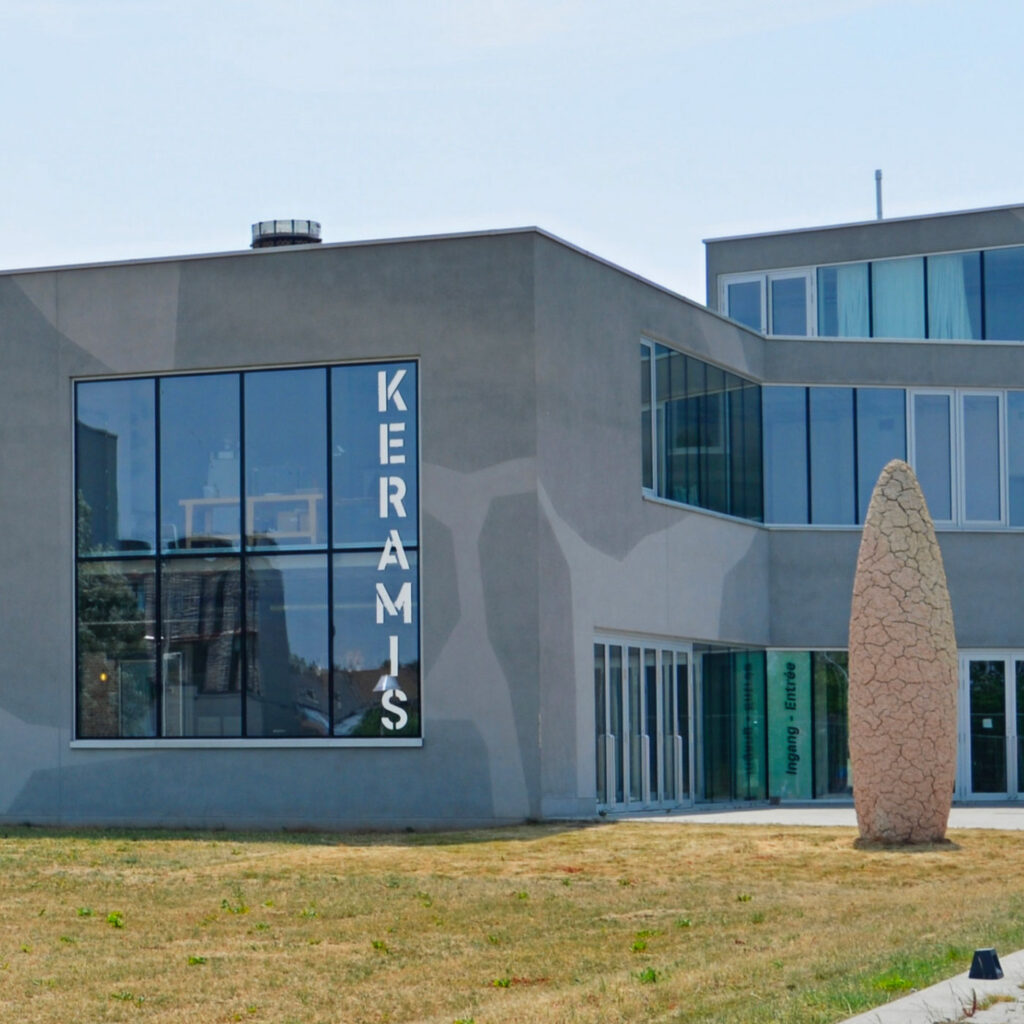
Keramis, the Centre for Ceramics of the Wallonia-Brussels Federation, is located in La Louvière on the site of the former Boch faience factory. At once a museum, an art space, and a place of creation, it develops its programme around the site’s ceramic history, the preservation of industrial heritage, and contemporary artistic production. Its contemporary architecture incorporates a listed historic building housing three monumental bottle kilns, the last surviving examples of their kind in Belgium, making Keramis a singular place where heritage, working-class memory, research, and contemporary creation come together.
Keramis preserves and highlights both the tangible and intangible traces of the activity once developed by the Boch faience factory, while also presenting exhibitions, residencies, workshops, and activities for a wide range of audiences. Its collections bring together more than 10,000 objects and documents related to the history of ceramics and the work of the former manufacture. In this way, the institution affirms a dual mission: to preserve a major regional industrial heritage while supporting contemporary forms of ceramic creation.
Informations
- 17.04 > 31.05.2026
17 avril à 20 h. Opening - Keramis
- 1 Place des Fours-Bouteilles
7100 La Louvière, Belgique - keramis.be
Production
- Keramis
- 15 mai à 19h. Journée mondiale du louviérois/ Nuit des musées louviérois
- Photo credits Roxane Rajic : Odessa Malchair
- With the support of Transcultures
